when i first started eating ramen, i didn’t really know what to look out for.
i mean, no shit. if i did, it would be the dunning-kruger effect, wouldn’t it? but i digress.
my ramen origins
so when i first started out, i leaned into familiar flavours. as a singaporean, i really liked and enjoyed the heavy flavours of ramen that was often associated with ramen in singapore. the bold flavours, the fatty pork belly, the thick mouthfeel of the soup as well as the other toppings that really contributed to the richness of everything. it was all i ever wanted. but i slowly realised that some places did things a little better than other places (and similarly, some places were a little bit worse at X and Y than others).
for example, bariuma ramen, my first favourite, did an excellent soup with really chewy noodles and just the right amount of spice. it wasn’t a pure tonkotsu as well but to be honest i never asked. it was a shoyu tonkotsu that wasn’t a mere one-dimension pack-a-punch kind of tonkotsu. the shoyu lent its seasoning to provide a bit more depth than some of the other bowls of ramen out there. the chilli paste they added on top provided some spice to cut the richness of the soup, and they added black pepper to provide a different kind of heat. i remember that being one of my favourite bowls of ramen in 2016, and i always went by whenever i had the chance whilst introducing to other people about this place.
こだわりポイント (kodawari point)
i didn’t realise it back then, but i found out that in japan, it was what other people would call a “kodawari point”. while i don’t rate the place as well as i used to a while back, i do think that the bowl really struck up my interest, and eventually love, for ramen. to some people, especially in japan, it seems like food that is easy and fast to eat, especially when you don’t have much time. but if you look deeper into ramen in japan, you realise that there is so much more about ramen and the surrounding culture.
firstly, there are a lot of places in japan that have their own style of ramen. think kyushu with tonkotsu, hokkaido with miso, and tokyo with shoyu! there’s definitely a lot at variation already.
but let’s say if we were to dive deeper into kyushu, for example, you realise that each prefecture in kyushu has their own style of tonkotsu ramen. for example, fukuoka usually does thin noodles with white milky soup and a shio tare (at least i think so). this is in comparison to some places like kumamoto where there are added garlic chips and (allegedly) sesame oil in addition to a double soup, which is tonkotsu and chicken soup blended together.
we can also look at hokkaido, another example i listed. what you might not realise is that it’s not just miso in hokkaido, but actually a mixture of a few things. their shio ramen is a bit more famous in hakodate, and some other areas in hokkaido are a bit more famous for their shoyu.
there is constant debate on “where is the best”, with some people leaning more towards tokyo because… they live there. and some people might say somewhere else is the best because they really like the certain styles associated with it. but everyone that is involved in this ramen otaku discussion will tell you one thing: that the best shops often have a kodawari point that they will work towards to.
these shops… they’re living masterpieces. their masters are people that chase perfection for every bowl they make, in hopes that they make the best bowl for their dear customers. this philosophy has been a key point for anyone who’s serious enough such that they want to open a ramen shop in japan. it’s always finding their own kodawari point and chasing a constantly moving goalpost formed by their own perception of ramen. it’s why some of these places probably have some of the most competition in japan, and it’s why the overall quality of food, including ramen, is so damn high. it is their source of pride. it is their identity of why the food they’ve made is so good.
the kodawari way, or the industrial way
i try to bring this when i start working, but like anything at work, not everything will go one’s way. and i guess it’s been a good reflection for me rethinking about what kodawari meant to me.
to be fair, it’s not like i haven’t been adopting this “spirit” of kodawari. when it comes to some of my hobbies like cooking or coffee, the kodawari spirit is ever-present. when it comes to cooking, i try to make it such that it is the best i can make it with the ingredients i’ve painstakingly brought back from different countries. with coffee, it is really trying to figure out what’s the best grind for certain coffee, and how exactly to balance it and to make it a little bit better than the previous day. but if it’s ingrained in you, sometimes it’s not as obvious of a concept as you think it is. perhaps it’s something that i have “taken for granted” recently, and i just need something to remind myself of this same principle that i have previously integrated into my life.
but this kind of goes against the way the industry moves, right? of course, industry expects results, yes, but they expect results in a way such that you have to be fast, and you have to make tradeoffs on the go instead of being allowed to pursue perfection. i wouldn’t say it is a “wrong” way to deal with life, but i also think that each situation has its own requirements, so in a corporate world it might be a little different. but that’s where you have choices, and i think it reflects how i bounce between different modalities of work. right now, i do half-half of things right.
for example, when i talk about engineering and creating a new feature and everything right, of course the initial progress is really fast. i think about what exactly is needed in order for me to get a MVP and simply iterate from there. for someone who has a “background” in working at startups, the 0 to 1 is quite natural for me, and is quite often what exactly is needed when creating new features right? but then that’s balanced by the non-engineering, and rather, research path whereby you take time to really explore certain directions before you do the exploitation. so, in a way, research seems to be more of a “kodawari” mentality. and even then, with engineering, i have found myself to be partaking in the process of optimization, which definitely takes quite a while to really think through. this is also kind of like going from 1 to 1.5, and i guess eventually 1.5 to a 1000. it really draws parallels with what the “kodawari” mentality is like, and in recent times has been something that works out at work. it helps when you are really just trying to architect something that is bigger than a small component in the system, and it’s really cool to just start working with different modalities (e.g. with a browser interface, with a computer use interface, etc). but this obviously takes some time to really develop and bring it further, instead of a 1 day job.
and in a way, i think this is still something that ai can’t really beat humans right? first of all, ai doesn’t really know what exactly is their “kodawari point”, and really only humans can kind of define that. ai can define that as well, but it’s so finicky with this that it basically just changes its damn point half the time. and also, i believe that the kodawari point has something to do with tastes. obviously, everyone’s tastes are a little different, which is why the kodawari point will really depend on the person in terms of their own values as well. ai’s opinion of what is the “best” is really defined from the amount of data they’re trained on. secondly, the matter of spending time. ai can save us time, yes. but from what i’ve seen so far, a lot of the stuff ai can really save us time for is the more menial tasks instead of the more high-level thoughtful tasks. i can’t really pinpoint what exactly is the missing sauce ai does not have, but what i can tell you is that ai really cannot reason and that’s where our brains come into play and really do the thinking. some of our ideas are a lot better than what some of these ideas the ai thinks of. and the “kodawari point” is really developed with a lot of thought and effort that is put in the product. so to me, i think it’s a rather important aspect of mankind. lastly, i think the human touch is still a very important aspect of things, and i don’t mean in terms of just the values themselves. the human touch helps makes things that can be used with any form of technology ultimately human. and there are people that definitely still appreciate that aspect. the “kodawari point” definitely still has a very human touch to it, i would imagine! even a machine stops at a point when it has reached its objective. but somehow humans continuously set objectives to allow them to improve even further, which at the end of the day really ties into the “kodawari point” itself.
final thoughts
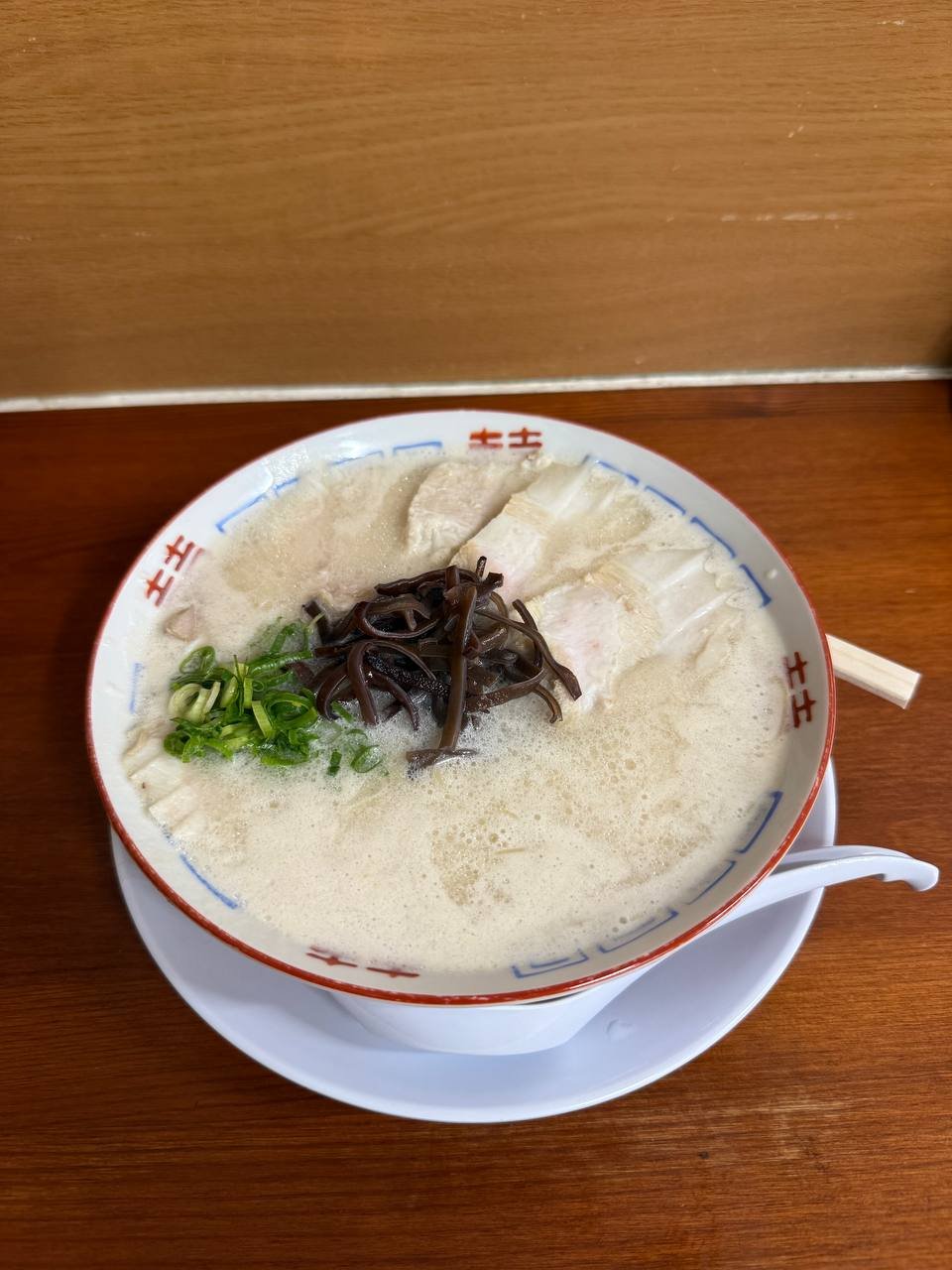
i really don’t have anything else to say, to be honest. i just wanted to say thank you for reading this. here’s a favourite bowl of mine from japan. if you’re ever in fukuoka, i think this cannot be missed at all. it’s a tonkotsu ramen from genki ippai and i think it’s so bloody delicious!